Solar Photography: Capturing the Sun’s Beauty
Have you ever wanted to capture the sun’s radiant beauty without turning your photos into a blinding mess? We all know that sunlight can be a photographer’s worst enemy, but what if we told you it can also be your best friend? With a little know-how, you can transform the way you view solar photography and create stunning images that leave everyone in awe. Let’s jump into the world of solar photography, where we align our lenses with the cosmos for spectacular results.
Understanding Solar Photography
At its core, solar photography is all about capturing the sun, whether it be in a vast landscape or through the mesmerizing details of a solar event. We must recognize that this type of photography embraces both beauty and the science behind light. It allows us to explore the interplay between light and shadow, revealing textures and colors that are simply lost in regular daylight.
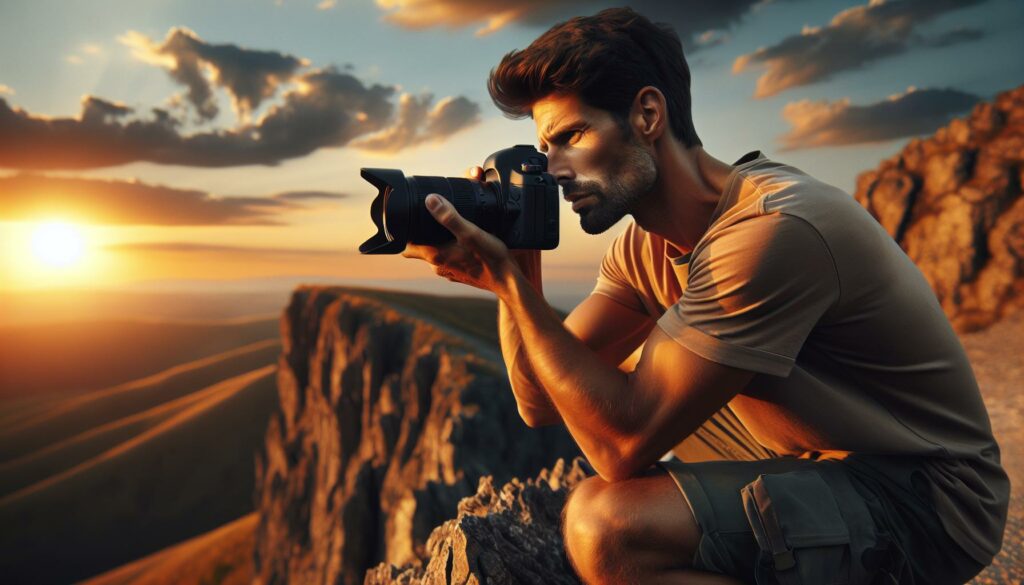
Understanding how the sun’s position changes throughout the day can also elevate our solar photography. The golden hour, that magical time just after sunrise or before sunset, offers softer light that can enhance the emotion of our shots. But we must remember, solar photography is not just about the sun: it’s about the stories we tell through our images.
Essential Equipment for Solar Photography
Before we head out to capture breathtaking solar views, let’s talk gear. First, a quality camera is essential, and while many might think a high-end DSLR is a must, some smartphones can deliver surprisingly well. So, whatever you have, let’s make the most of it.
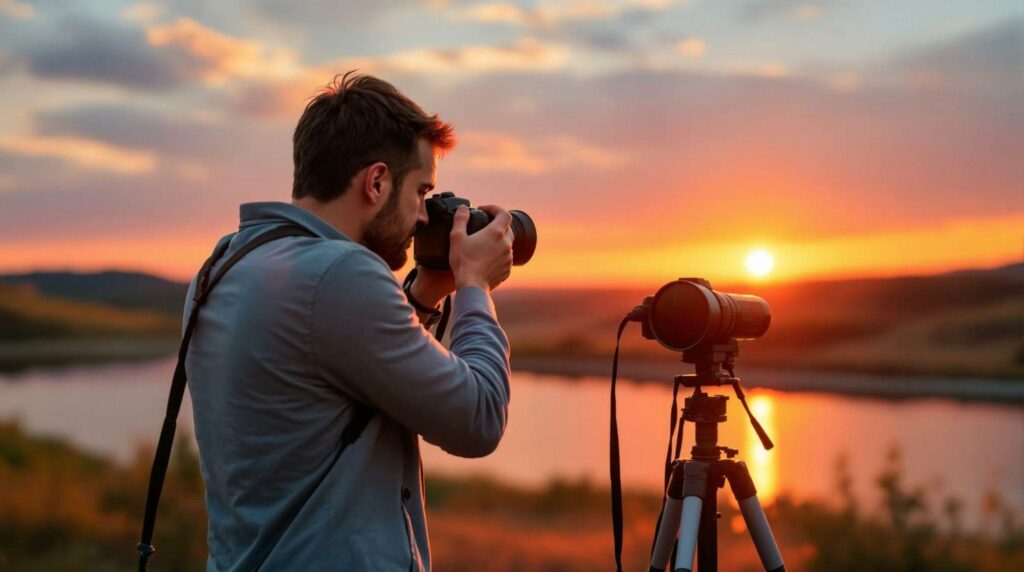
Next on our list is a sturdy tripod. Trust us: a steady hand can make all the difference, especially when dealing with bright sunlight. Think about solar filters too. These accessories protect our camera sensor and help reduce glare, allowing us to shoot confidently without worrying about damaging our equipment.
Techniques for Effective Solar Photography
Now, let’s get into the fun part, the techniques. Finding the right angle can turn an ordinary shot into a masterpiece. We often experiment with silhouettes against the sun, allowing that light to create striking contrasts in our images.
Another technique we love is using reflections. Have you ever tried capturing shots of sunlight bouncing off water? That sparkle can bring a magical touch to our photos. And don’t underestimate the power of composition: try the rule of thirds for more dynamic and engaging images. It’s about framing, positioning, and making our subject shine.
Post-Processing Tips for Solar Images
After we’ve clicked the shutter and captured the magic, it’s time for the post-processing phase. Editing can make ordinary photos extraordinary. We usually start by adjusting the exposure to enhance the sun’s brilliance and ensure details are not lost in the highlights.
Consider tweaking the contrast to give depth, and adding warmth can emphasize those golden hues. We might also play around with saturation: but, let’s not get carried away. Subtlety is the key to keeping your images looking natural and appealing.
Safety Considerations in Solar Photography
While the allure of solar photography can be captivating, we cannot overlook safety. Protecting our eyes must always be our first priority, especially when photographing solar events like eclipses. Simple solar filters can be lifesavers. We shouldn’t ever look directly at the sun without proper protection, our vision is too valuable. Also, ensuring that our equipment is safe under the sun is crucial. Heat can affect cameras, causing overheating, let’s keep an eye on our gear during those hot shoots.